Ryōkan
Sōtō Zen · 1758–1831
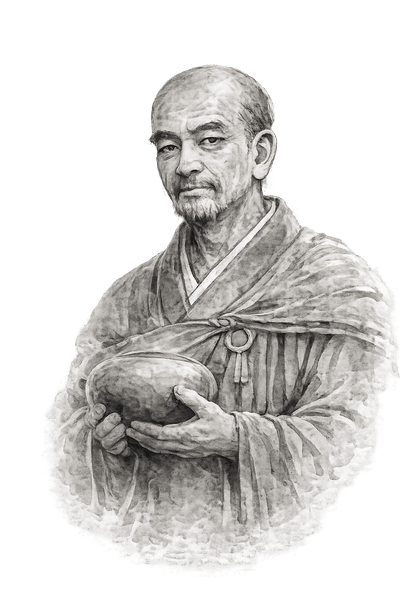
“The thief left it behind — the moon at my window.”
Ryōkan Taigu was a Japanese Zen monk and poet who lived as a hermit on Mount Kugami, begging for food and playing with children. He is remembered for the way he lived — simply, joyfully, without pretension.
His calligraphy was deliberately imperfect. His haiku captured moments of startling beauty in ordinary life. He gave away everything he owned.
Ryōkan embodied the Zen ideal that enlightenment is not separate from everyday life.
Key teachings
Simplicity
The highest practice is an uncomplicated life. No accumulation, no ambition, no striving.
Play
Joy is not separate from practice. Ryōkan played with children as his deepest meditation.
Notable works
One Robe, One Bowl
Selected poems and calligraphy. Small, beautiful, and quietly devastating.
Dewdrops on a Lotus Leaf
Further poems and Zen reflections. Simplicity as a form of eloquence.
One teaching like this each morning — and Mu, a companion who remembers your path.
Get Mushin · free